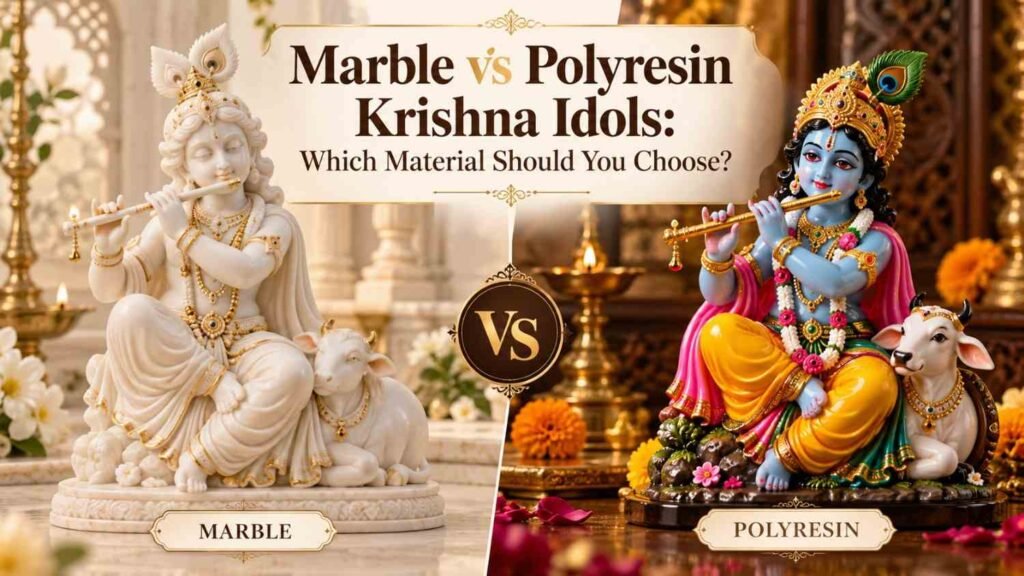
If you have been comparing options before buying, you have probably noticed the same question come up again and again: marble or polyresin — which Krishna idol material should you choose? Both materials show up across our catalogue and across the wider market, and each has real strengths depending on what you actually need the idol for. This guide breaks down the honest differences — weight, durability, price, look, and upkeep — so you can pick with confidence rather than guesswork, whether you are furnishing a full mandir room or simply choosing your very first idol for a work desk.
What Is a Marble or Marble-Dust Krishna Idol?
Marble and marble-dust idols are made from crushed natural marble mixed with a binding resin, then hand-finished and painted. This is the traditional material for larger Krishna idols and most Jugal Jodi statues, valued for its weight, cool stone-like texture, and long history of use in Indian temple sculpture.
What Is a Polyresin Krishna Idol?
Polyresin is a lightweight composite material, often used for smaller decorative Laddu Gopal statues and desk-sized showpieces. It takes fine detail well, comes in bright, consistent colours, and is significantly lighter and less expensive to produce than marble.
Marble vs Polyresin: Key Differences
Weight and Handling
Marble idols are noticeably heavier, which gives them a sense of permanence but makes larger pieces harder to move or handle daily. Polyresin idols are much lighter, making them easier to lift for daily abhishekam and dressing, especially for smaller Laddu Gopal forms.
Durability and Lifespan
Both materials are durable when cared for properly, but marble tends to hold up better against decades of handling and minor knocks, since it does not chip as easily as a thin polyresin shell. Polyresin idols can be prone to small chips at edges (fingers, crown points) if dropped, though this is uncommon with normal careful handling.
Price
Polyresin idols are generally more affordable than a marble piece of a similar size, since the material and production process cost less. This makes polyresin a practical choice for a first idol, a desk piece, or a budget-conscious gift.
Look and Finish
Marble has a naturally rich, slightly textured stone-like finish that many buyers associate with traditional temple idols. Polyresin allows for very smooth, brightly painted detailing and tends to photograph with sharper colour contrast, which some buyers prefer for a more decorative, contemporary look.
Maintenance
Marble idols should be dusted with a dry cloth and kept away from harsh chemicals or prolonged water contact. Polyresin idols are slightly more forgiving — they can handle a gentle wipe-down more easily — but should still avoid strong sunlight, which can fade painted colours on either material over time.
A Quick Comparison at a Glance
- Weight: Marble — heavy; Polyresin — light.
- Typical price range: Marble — higher; Polyresin — more budget-friendly.
- Best for: Marble — mandir centrepiece; Polyresin — desk, car, first idol.
- Finish: Marble — natural stone-like texture; Polyresin — smooth, bright colour.
- Chip resistance: Marble — sturdier at edges; Polyresin — needs slightly more careful handling.
- Daily handling ease: Polyresin — easier due to lighter weight; Marble — more effort for larger sizes.
Which Material Suits Daily Seva vs Display?
If your Krishna idol will be handled daily — bathed, dressed, and moved as part of Laddu Gopal seva — a smaller polyresin idol or a compact marble-dust piece both work well, with polyresin having a slight edge for ease of daily handling. If the idol will mainly sit as a fixed centrepiece on a mandir shelf, a marble or marble-dust Jugal Jodi idol tends to feel more substantial and traditional.
Best Marble Krishna Idols

Laddu Gopal Krishna Idol (Yellow & Green) Marble -13 Inch
Original price was: ₹3,999.00.₹2,899.00Current price is: ₹2,899.00.

These larger marble pieces work well as a mandir centrepiece, offering the weight and traditional finish many households prefer for their main deity.
Best Polyresin Krishna Idols


These lightweight, detailed polyresin pieces are ideal for a desk, car dashboard, or a first small home temple where budget and ease of handling matter most.
Common Myths About Marble and Polyresin Idols
One common misconception is that polyresin idols are somehow “less sacred” or less suitable for worship than marble ones — this isn’t true. What matters in Hindu tradition is the devotion and care given to the idol, not the specific material it is made from. Polyresin, marble, brass, and wood have all been used for devotional statues across different regions and eras. Another myth is that marble idols never need care because they are “stone” — in reality, marble dust idols still have painted details and gold foil work that can fade or wear if left in direct sunlight or handled roughly, just like any other material.
How to Care for Each Material
- Marble: dust with a soft, dry cloth; avoid soaking in water; keep gold foil areas away from direct rubbing.
- Polyresin: wipe gently with a soft, dry cloth; avoid harsh chemicals; handle carefully to prevent chipping at fine edges.
- Both materials: keep away from prolonged direct sunlight to prevent colour fading over time.
More Guides You Might Find Useful
- Krishna Idol Buying Checklist: Size, Material aur Placement — a broader guide covering all buying factors, not just material.
- Krishna Idol Vastu Tips: Direction, Height aur Placement Guide — for where your idol should sit once chosen.
- Jugal Jodi Idol Guide 2026: Price, Size aur Colour — if you are specifically considering a marble Jugal Jodi piece.
Frequently Asked Questions
Is marble or polyresin better for a Krishna idol?
Neither is universally “better” — marble suits a permanent mandir centrepiece with a traditional look, while polyresin suits a lighter, more affordable idol for daily handling or desk display.
Which material is more durable, marble or polyresin?
Marble generally withstands decades of handling and minor knocks better, though a well-made polyresin idol is still durable under normal careful use.
Is polyresin safe for daily puja?
Yes — polyresin idols are commonly used for daily seva, especially in smaller Laddu Gopal forms, and are actually easier to lift and handle each day than a heavier marble piece.
Why are marble idols more expensive than polyresin ones?
Marble idols use costlier raw material and a more labour-intensive hand-finishing process, which is reflected in the price compared to lighter, faster-to-produce polyresin pieces.
Can I keep both marble and polyresin idols in the same home temple?
Yes — many households mix materials, for example a marble Jugal Jodi centrepiece alongside a smaller polyresin Laddu Gopal for daily seva.
Does a polyresin idol lose value or meaning compared to marble?
No — the spiritual significance of an idol comes from the devotion behind it, not the material. Both marble and polyresin idols are widely accepted and worshipped across Hindu households.
Which material is easier to clean, marble or polyresin?
Both require similar gentle care — a soft, dry cloth for regular dusting — though polyresin’s smoother surface can make quick wipe-downs marginally easier for small, frequently handled pieces.
Explore both materials in our Krishna idol collection at Kanhaji and choose the piece that fits your home, budget, and daily routine.